
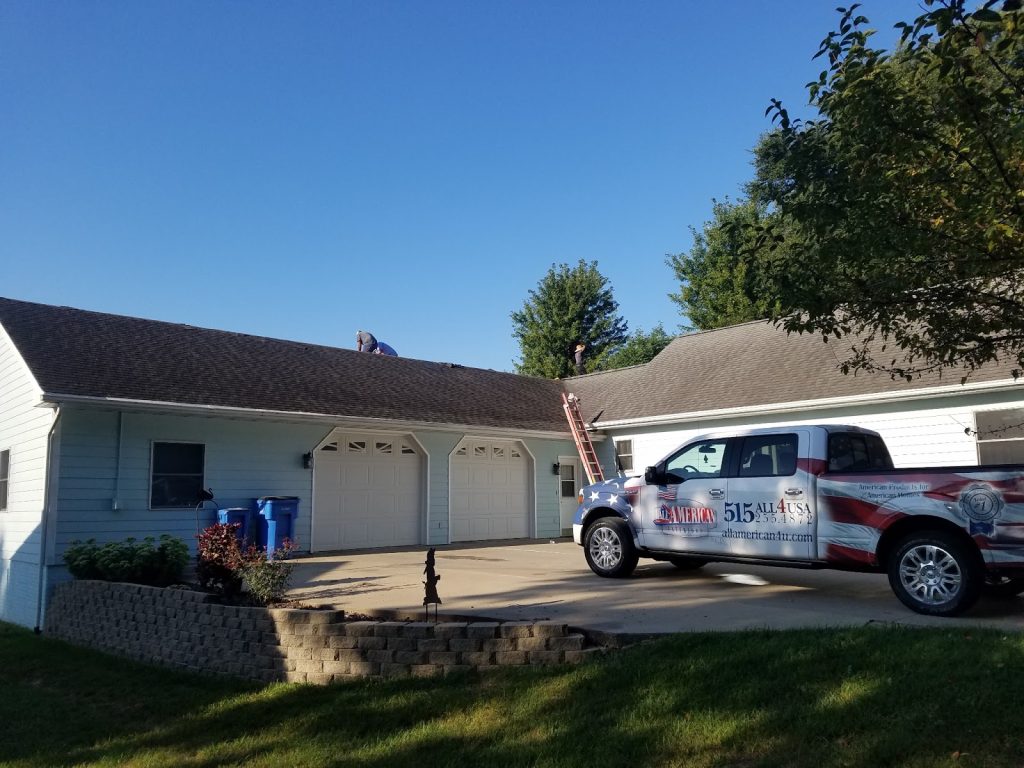
High winds, hail, falling branches and severe storms can damage a roof with little warning. When water begins entering your home, taking safe steps and arranging an emergency roof inspection can help limit additional damage.
All American Exteriors helps homeowners throughout Central Iowa inspect storm-damaged roofs, document visible damage and determine whether temporary protection, roof repair or roof replacement may be needed. Insurance claim assistance and communication with the insurance adjuster are also available when necessary.
What to Do When Your Roof Starts Leaking
Never climb onto a wet or storm-damaged roof. High winds, rain, loose shingles and unseen structural damage can make the surface extremely dangerous.
Instead, focus on limiting damage from inside your home:
- Place buckets or sturdy containers beneath active drips.
- Move furniture, electronics and valuables away from the affected area.
- Use plastic sheeting or towels to protect flooring when it is safe to do so.
- Keep family members and pets away from sagging ceilings.
- Turn off electricity to the affected area if water is near lights, outlets or wiring and you can safely access the breaker.
Do not stand beneath a bulging ceiling or attempt repairs near electrical components. Contact a roofing professional as soon as possible and call emergency services if the damage creates an immediate safety hazard.
Inspect the Damage From the Ground
After the weather clears, inspect the property from a safe location on the ground. Do not walk on the roof, even if the damage appears minor. Storm damage is not always visible and weakened materials can give way unexpectedly.
Look for visible warning signs such as:
- Missing, lifted or curled shingles
- Exposed roof underlayment
- Shingle pieces scattered around the property
- Dented gutters, downspouts or roof vents
- Cracked skylights or damaged flashing
- Tree limbs or other debris resting on the roof
- Water stains on ceilings or walls
- Visible sagging along the roofline
Severe sagging, cracked structural components or a large tree resting on the home may indicate structural instability. Keep everyone away from the affected portion of the house and contact emergency services if you believe the structure may be unsafe.
Common Types of Emergency Roof Damage
Different weather events can affect a roofing system in different ways. Recognizing the likely source of the damage can help you explain the situation when requesting an emergency roof inspection.
- Wind damage: Strong winds can lift shingles, tear materials away and expose the underlayment beneath.
- Hail damage: Hail can loosen protective granules, crack shingles and dent metal roofing components. Learn more about the signs of hail damage.
- Falling debris: Tree branches can puncture shingles, damage decking and create structural concerns.
- Heavy rain: Wind-driven rain can enter through damaged flashing, missing shingles or existing weak points.
- Ice and snow: Heavy accumulation and repeated freezing can contribute to leaks, ice dams and damaged roofing materials.
A professional inspection is important even when the visible damage appears limited. Roofing problems can extend beneath the surface and affect the underlayment, decking, flashing or ventilation system.
How to Find a Reliable Emergency Roofing Contractor
After a major storm, homeowners may receive calls or unexpected visits from contractors who recently arrived in the area. These companies are often called storm chasers. Some may offer quick repairs, collect payment and leave before problems become apparent.
Choose an established local roofing company with a history of serving homeowners in your community. Before authorizing work, ask:
- Does the contractor carry appropriate insurance?
- How long has the company served the area?
- Will you receive a written inspection report or estimate?
- Can the company explain the difference between temporary protection and permanent repairs?
- Does the contractor have verified reviews from local homeowners?
- Will the company assist with storm damage documentation?
- Who will complete the work and stand behind the final repair?
A trustworthy roofing contractor should clearly explain the damage, recommended work, anticipated costs and available options without pressuring you into an immediate decision.
Temporary Roof Protection vs. Permanent Repair
Emergency roof tarping or another temporary covering may be used to reduce water intrusion until weather conditions improve and permanent repairs can begin. Temporary protection is intended to secure the damaged area, not replace a complete repair.
Once conditions are safe, the roofing contractor can inspect the full system and determine whether the home needs a localized repair, replacement materials, new decking or a larger roof replacement.
The cost of emergency roof repair depends on the size of the damaged area, roof height, slope, materials and extent of hidden damage. Request a written estimate before authorizing permanent work and make sure you understand which services are temporary.
Documenting Roof Damage for Insurance
If the damage may involve a homeowners insurance claim, begin documenting the situation as soon as it is safe. Coverage varies by policy, so contact your insurance provider for instructions before making permanent repairs.
- Photograph visible exterior damage from the ground.
- Take pictures of interior water stains, damaged ceilings and affected belongings.
- Record the date and approximate time of the storm.
- Save receipts for temporary protection and other emergency expenses.
- Keep copies of inspection reports, estimates and communications.
- Avoid discarding damaged materials until your insurer provides direction.
All American Exteriors can inspect the roof, explain the visible damage and provide documentation related to the recommended work. The insurance company determines coverage and approves the claim based on the terms of your policy.
Why Homeowners Choose All American Exteriors
- More than 30 years of experience serving Iowa homeowners
- Free roof inspections and estimates
- Roofing installation and storm damage repair
- Insurance claim assistance
- Experienced in-house crews
- Quality American-made products
- Long-term warranty options
- Local service from a company that stands behind its work
All American Exteriors understands how stressful sudden roof damage can be. Our team helps homeowners evaluate the damage, understand the repair process and take the next steps toward protecting their homes.
Request an Emergency Roof Inspection
If your roof has been damaged by wind, hail, falling debris or heavy rain, do not wait for the problem to spread. Keep everyone away from unsafe areas, contain interior water when possible and arrange a professional inspection.
Contact All American Exteriors to request a roof inspection and learn more about the repair options available for your Central Iowa home.
What should I do immediately if my roof starts leaking?
Stay off the roof and contain the water from inside using buckets or sturdy containers. Move valuables away, keep people clear of sagging ceilings and turn off electricity to the affected area if water is near wiring and the breaker can be accessed safely.
How can I inspect storm damage safely?
Wait until the weather clears and inspect the roof from the ground. Look for missing shingles, exposed underlayment, damaged gutters, fallen branches and roofline sagging. Do not climb onto a storm-damaged roof.
What is emergency roof tarping?
Emergency roof tarping is a temporary measure used to reduce water intrusion until conditions are safe and permanent repairs can be completed. It does not replace a professional inspection or permanent repair.
How do I avoid roofing storm chasers?
Choose an established local roofing company with appropriate insurance, verified local reviews, written estimates and a history of serving homeowners in the area.
What should I document for a roof insurance claim?
Take photographs of visible exterior and interior damage, record when the storm occurred, save receipts and keep copies of inspection reports, estimates and communications. Contact your insurer for instructions because coverage varies by policy.